Why Thousands of Brits Are Cancelling Their Monthly Neck Massages For This £89 Device

Last updated May 27, 2026
Summary: The massage always feels incredible. Then it wears off in two days and the stiffness is back. It is not a bad therapist — it is a missing step.
- Most neck pain returns within 48–72 hours of massage because cervical compression is never addressed
- Physios use a 3-step sequence: heat → deep vibration → traction — massage alone is only step two
- A monthly massage habit costs £720–1,200 per year for temporary relief that never sticks
- Neck Restore replicates the full clinic sequence at home for a one-time £89
Left: the cycle that never ends. Right: 15 minutes that actually breaks it.

If you have ever booked a neck massage and felt brilliant for a day or two — then woken up on day three back to square one — you are not imagining it. The problem is not the massage. The problem is what the massage is missing.
I had a standing monthly appointment for almost two years. Sixty pounds a session, every four weeks, sometimes every three when the tension built up faster. My neck always felt better walking out. And by the following Friday it was clamped again, exactly where it had been before I walked in.
It took a physio appointment — one I only booked because a friend insisted — to find out why.
The massage is doing its job. That is the problem.
Massage is genuinely effective. It softens muscle tissue, improves blood flow, and breaks up surface tension. A good massage therapist is very good at exactly what they do. But they are working on the muscular layer. And the reason neck pain keeps returning usually lives one layer deeper.
The cervical spine — the seven vertebrae running up from the base of the skull — can compress over time. Phone use, laptop posture, driving, even prolonged reading all push the head forward and flatten the natural lordotic curve. This compresses the joints. The muscles around them tighten to compensate. Massage releases the muscles. The compression underneath stays exactly where it was.
When the muscles return to their normal tone over the following days, they tighten straight back into the same pattern. Because the pattern was never fixed. The spring was never let out.

"Most patients who see good results from massage are back within three or four weeks. It is not that massage does not work — it is that they are only getting half of the treatment."
What physios do that massage therapists cannot
When you see a physiotherapist for neck pain, they typically do not stop at soft tissue work. The clinical protocol for cervical tension and compression is a sequence of three stages, each preparing the tissue for the next.
- Infrared heat (10–15 minutes) — loosens tight muscle fibres, increases circulation in the cervical area, and prepares the tissue for deeper work. Without this, the massage works against resistance.
- Vibration massage — works into the deeper adhesions and breaks up the tension that runs along the base of the skull. This is the step a spa massage covers. It is not enough on its own.
- Cervical traction — gently opens the joint space between vertebrae using a calibrated angle and your own bodyweight. This is what decompresses the spine. This is the step that makes the relief last.
Almost everyone who pays for a regular neck massage is only receiving step two. Steps one and three — the ones that actually address the underlying compression — are left out entirely.


Why the monthly massage never cures it
This is not a criticism of massage therapy. It is a structural limitation. A massage therapist, by the nature of their work, cannot apply cervical traction. They cannot position the head at a precise decompression angle while also applying heat at the exact tissue level where it is needed. These are separate clinical tools.
The relief you feel after a massage is real. The muscles genuinely loosen. Blood flow increases. You feel lighter for a day. But the underlying joint compression that is driving the muscle tension remains. Twenty-four hours later the muscles have tightened back into their compressed position. Forty-eight hours later you are searching your diary for the next available appointment.
The monthly massage is not failing you. It is just an incomplete version of what actually works.
The maths become uncomfortable quickly
| Option | Cost | Duration of Relief |
|---|---|---|
| Monthly neck massage (£60–100/session) | £720–1,200/yr | 1–3 days |
| Private physio course (6–8 sessions) | £420–600 | Weeks–months (if completed) |
| Neck Restore — full 3-step sequence at home | £89 once | Daily. 15 minutes before bed. |
When you look at it as an annual spend, a £60/month massage habit costs £720 a year — more than eight Neck Restores — to keep the pain at an acceptable level without addressing it.
What actually ended the cycle for me
My physio gave me the sequence explanation above and then suggested something specific: a cervical traction device with integrated heat and vibration. One she had recommended to other patients who could not commit to an ongoing appointment schedule. I looked it up. It was less than what I spent on two massage sessions.
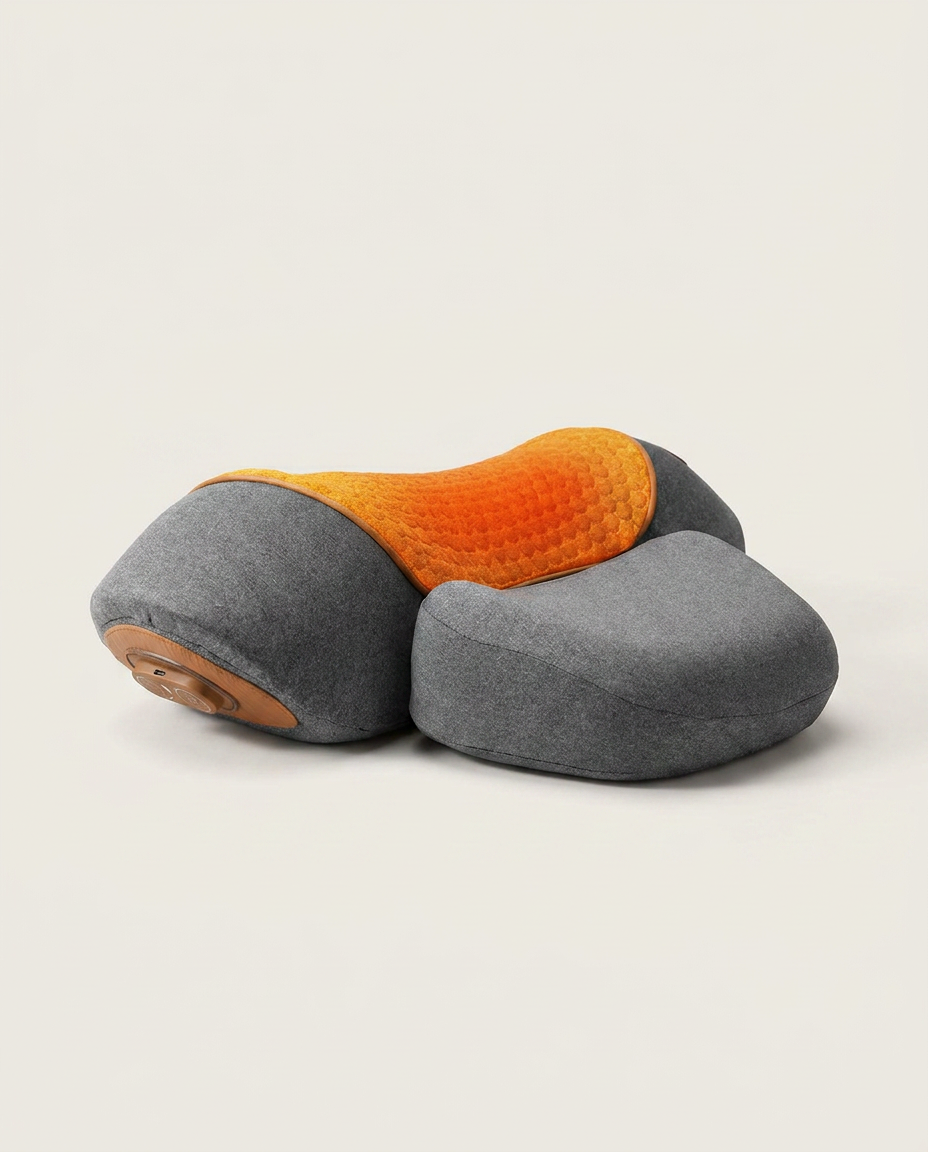
The Neck Restore is built around the same 3-step sequence. You lie back, place it under your neck, and it runs heat (three levels), vibration massage (three intensities), and positions your cervical spine at a decompression angle simultaneously. The 15-minute auto-shutoff makes it easy to use before bed. Most people feel the difference within the first week.
- Infrared heat penetrates deeper than surface warmth — softens the tissue before the massage layer begins
- Vibration massage at the skull base level, where tension accumulates from phone use and desk work
- Passive traction via the curved profile — gently decompresses the cervical joints using your own bodyweight
- 15-minute auto-shutoff designed for safe daily use, not occasional treatment
- USB-C rechargeable — 90 minutes to charge, up to 2 hours per session
Imagine booking a massage — and realising you do not need it.
Not because the massage was bad. Because the underlying reason you kept booking it has been addressed.
Neck Restore — £89 today (was £129)
The 3-in-1 device that replaces the full clinic sequence at home.
Use it every night for 90 days. If your neck does not feel meaningfully better, email us for a full refund. No questions.
Try it for 90 nights. Keep it or return it.
GET NECK RESTORE — £89Free UK delivery · 90-day money-back guarantee · Secure checkout
ADVERTISEMENT: This page is an advertorial produced by RABBIO and is not an independent news or health article. Medical and health disclaimer: the content on this page is for general informational purposes only and does not constitute medical advice. Neck Restore is not a medical device and is not intended to diagnose, treat, cure, or prevent any medical condition. If you have a diagnosed spinal condition, disc injury, severe or radiating pain, numbness, or any other medical concern, consult a qualified healthcare professional before using a traction or massage device.
Comments
This is literally my life for the past two years. Monthly massage, feel amazing Saturday, stiff again by Tuesday. I always assumed I just needed to go more often.
Same. I thought "more frequent" was the answer. Went every 3 weeks. Still woke up stiff most mornings. The compression explanation finally made sense of it.
I said to my therapist "I feel like I'm addicted to these appointments" and she laughed but didn't disagree. Now I understand why the cycle exists.
My physiotherapist said almost word for word the same thing about the 3 steps. She actually recommended I get a traction device for home. Wish she had told me what brand.
Mine said the same. Ended up doing a lot of research myself. This was the one that had the heat + traction combination, most others are just one or the other.
I sat down and worked out what I have spent on neck massages in the last 3 years. It was over £2,100. I feel slightly sick about it. Could have bought this 20 times over.
To be fair — is there still any benefit to massage if I get this? I actually enjoy the appointment.
Totally, the relaxation and time out is real. The difference is you stop needing it every 3 weeks to manage the pain. I still go occasionally now — it just feels like a treat rather than maintenance.
Ordered this after reading the article. The traction concept genuinely makes sense once you understand what compression means. I have been treating symptoms for years apparently.
Used it for the first time last night. The heat setting on medium is genuinely nice — deeper than a wheat bag. The vibration on the skull base is the part that surprised me. First morning in ages I got up without stiffness.
Can you use this every day? Or is it more like 2–3 times a week?
I use mine daily before bed. The 15 minute shutoff feels like it was designed for that. Not too long that you skip it, not too short to feel the benefit.
Cancelled my standing massage appointment last month. My therapist was not even offended — she said she had recommended this kind of device to half her clients and knew most of them did not need to come as often.
How long does delivery usually take?
Mine came in 4 working days. Tracking email arrived the morning after I ordered.
My husband thought it looked like a prop from a sci-fi film and was very sceptical. He tried it on day two and now schedules his 15 minutes before I get a chance.
The base of my skull is where all my tension builds. Massage never quite reached it because that area is hard to work on properly. This vibration setting hits exactly there. Strange but brilliant sensation.
Just arrived. Packaging is really good, feels premium for the price. About to use it for the first time tonight.
I have a C5-C6 disc bulge. Is traction safe with that? Genuinely asking.
Worth checking with your GP or physio first if you have a diagnosed condition. The disclaimer at the bottom of the article mentions exactly that. I have mild disc issues and my physio said gentle traction was fine but I'd always confirm individually.
Can you control the heat and vibration separately? I run hot so I would want to skip the heat some days.
Yes — separate buttons. You can have vibration only, heat only, or both. I use vibration only in summer.
The 90-day guarantee was what pushed me to try it. If it did not work I could return it. It worked. I am not returning it.
£89 is exactly what my last single massage cost. Did the maths for about 30 seconds and ordered.
Second week in. The stiffness that used to be there when I first woke up is noticeably better. I was sceptical that 15 minutes before bed could make that much difference. It does.
My massage therapist is great and I will still see her. But I understand now why the results never lasted. I was skipping straight to step two for two years.
Does it make any noise? I want to use it late at night without disturbing anyone.
It is a low hum on the higher vibration setting. Fine to use in a shared room. I fall half-asleep with it on most nights.
Bought one for myself after reading this and one for my mum who has been on the massage circuit for years. The look on her face after the first session was worth it.
I was convinced this would feel uncomfortable. The traction in my head meant being pulled or stretched. It is actually passive — you just lie on it and the curve does the work. Very different to what I expected.
The fact that my physio quit seeing me for this specific issue once I had it tells you a lot. She told me there was nothing left for her to do that I was not doing at home.